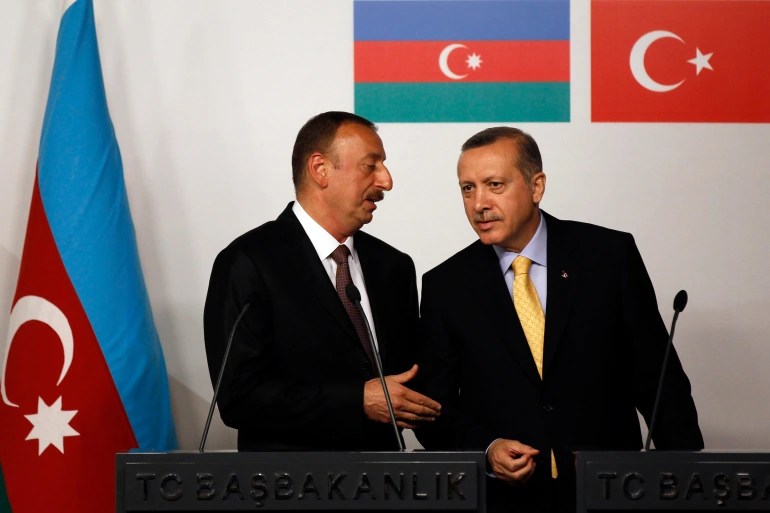
NATO, the United States, Russia, and Iran have repeatedly called for an halt to the intense fighting that broke out between Azerbaijan and Armenia over the disputed region of Nagorno-Karabakh in late September.
Turkey has also called for a truce, but it has struck a different tone.
In early October, Turkish President Recep Tayyip Erdogan praised Azerbaijan’s “great operation both to defend its own territories and to liberate the occupied Karabakh”.
Turkey stands with and will continue to stand with “friendly and brotherly Azerbaijan with all our means and all our heart”, Erdogan said.
Nagorno-Karabakh is internationally recognised as Azerbaijani territory, including by Armenia, but is dominated by ethnic Armenians who broke away from Baku in a war in the 1990s.
It has been the subject of several UN resolutions calling for an end to the occupation of Azeri lands.
Turkey and Azerbaijan have strong economic, military, cultural and linguistic ties. Erdogan has invoked the saying that the countries are “one nation, two states”.
Meanwhile, Turkey and Armenia have a fraught history. Armenia calls the killing of up to 1.5 million Armenians in the late Ottoman period a “genocide”, which Turkey refutes.
Ankara’s vocal and fervent support for Baku has angered Western nations, who have accused it of adding fuel to a dangerous conflict.
To date, more than 1,000 people have been killed, including dozens of citizens on both sides.
Analysts say Turkey’s staunch backing of Azerbaijan in this round of fighting has played a significant role in what is the most serious flare-up in the region since the 1990s and reveals insights into Ankara’s wider ambitions in the region.
Read the rest of this article published by Al Jazeera English here.
 Writing by Patrick Keddie