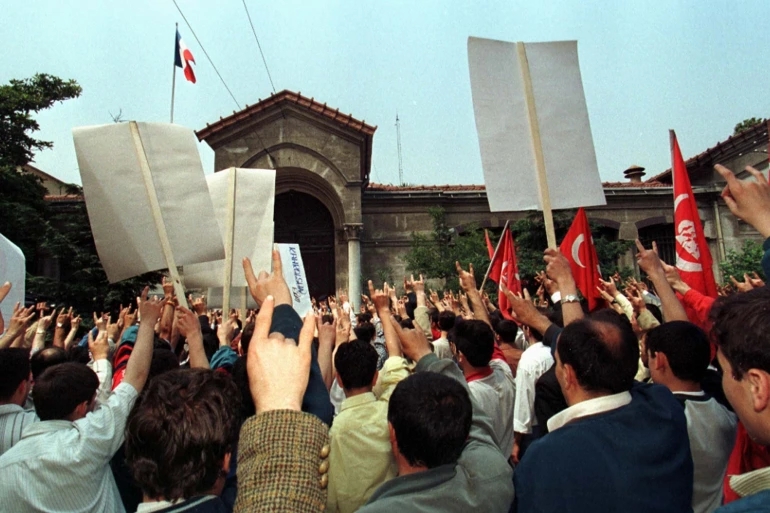
n Turkic mythology, a grey wolf led ancient Turks out of the wilderness of the Central Asian Ergenekon valley, where they had been trapped for centuries following military defeat, and into salvation.
In the 1960s, the “Grey Wolves” became a nickname for the Ulku Ocaklari (Idealist Hearths), the Turkish ultranationalist youth and street movement largely affiliated with the Nationalist Movement Party (MHP) – the MHP is a parliamentary ally of President Recep Tayyip Erdogan’s governing Justice and Development Party (AK Party).
In early November, France banned the Grey Wolves, with government spokesman Gabriel Attal accusing the group of “extremely violent” actions and threats.
Attal cited the recent spraying of an Armenian “genocide” memorial near Lyon with slogans such as “grey wolf” and Erdogan’s initials.
While Ankara accepts many Armenians died in ethnic fighting and acknowledges deportations between 1915-1917 during World War I, it refuses the label of genocide.
Opposition politicians in Germany have also called for a ban on the Grey Wolves, which has been labelled as a far-right hardline group by the country’s domestic security agency.
This month, Dutch members of Parliament backed a motion asking the government to outlaw the Grey Wolves and to pressure the European Union into implementing a ban.
In 2019, Austria banned the wolf hand salute linked to the Grey Wolves.
However, in the case of France, the Turkish Foreign Ministry has said Paris was addressing an “imaginary formation” and the ban “reflects the latest contradictory psychology that this country lives in”.
In a November 4 statement, it said: “It is unacceptable to ban symbols that are used widely in many countries and bearing no illegal aspects.
“It is unfortunate that those who advocate that the freedom of expression cannot be restricted in any way when it comes to themselves easily restrict this freedom when it relates to others.”
Read the rest of the article published by Al Jazeera English here.
 Writing by Patrick Keddie